A Website for Flooring Contractors, Built For You

39.3% of homeowners start their search for a home services contractor on Google Search or Google Maps, and a site that shows your LVP installs, your sand-and-seal work and your stair treads is what turns that search into a measure appointment.

  • We build it for you — you never open a page builder
  • $25/month or $250/year, with the domain, hosting and support included
  • Free for 30 days on your own yoursite.buildernow.net address
Build Your Flooring Website

We build awesome
Flooring websites.

Fill out your information and in 3 simple steps your preview will be built, no coding necessary.

Pick a Domain

The beginning of your home on the web starts with a name.

Describe Your Business

Tell us a bit about your business; the services you offer, and your history.

Tell Us About You

Let us know how customers can best contact or reach you.

Unlimited Possibilities.
3 simple steps.

Watch this short video for a quick walk through on how simple it is to get your website online.

Get Your Business Online Within in Minutes

Website Design made easy. Just one click away.

Get Started

Why Flooring businesses choose BuilderNow

Fast, Friendly, Secure, Quality

Fully Secured

All of our websites are fully secured with SSL encryption as well as top of the line servers.

Best Performance

Our web hosting servers have an uptime of 99.99%. Host with us hassle free with an online gurantee.

What a weak website costs a Flooring business

69% of homeowners price the job before they ever call you

They have already read somebody's square-foot numbers by the time your phone rings. If your site says nothing about what drives a price — material grade, waste factor on a diagonal or herringbone layout, tear-out and haul-away of old carpet and tack strip, stairs priced separately — then the only number they carry into the conversation came from someone else. You end up defending a price instead of explaining a scope.

Your best floors are buried in your phone

Nine hundred photos, and the good ones are three months back behind receipts and a picture of a transition strip you needed at the store. Flooring sells on sight. A homeowner picking between wire-brushed engineered oak and a matte LVP wants to see finished rooms in real light, not a stock photo of a living room nobody in your county has ever stood in.

Nothing online says you do the part underneath

Anyone can snap planks together. The work that separates you is flatness tolerance, grinding or patching the high and low spots, moisture testing a concrete slab, getting a vapor barrier right so the manufacturer warranty survives. A floor telegraphs every dip under it, and the callback six months later belongs to whoever skipped that. If none of that is written down, you read like a plank installer.

Homeowners call about two contractors, and you are not one of them

Flooring is a planned purchase. People measure rooms, pick a species, set a budget, then reach out to a short list — not a long one. That list is built from what they can find and verify in an evening on the couch. Referrals still arrive, but the referred homeowner looks you up before calling, and a dead Facebook page is not a reassuring answer.

How customers choose a Flooring company

Flooring almost always starts with an event, not an itch. A dog ruined the hallway carpet. A toddler is crawling on twenty-year-old pad. A dishwasher let go and buckled the kitchen laminate. A house is about to be listed and the agent said the floors are the one thing worth doing. That event sets the timeline, and the timeline decides who gets the job — the contractor who can be found and reached quickly, not the cheapest one in the county.

Then the research starts, and it is specific. They learn the difference between LVP and LVT, between engineered hardwood and solid, and they want to know whether a floating click-lock product makes sense on their slab or whether glue-down is the right call. Pets and kids push a lot of people toward waterproof LVP who walked in asking about hardwood. Others fall for white oak and need to hear about acclimation time and why you will not drop material Friday and lay it Saturday. They are checking whether you talk about this like someone who has done it a few hundred times.

Seasonality is real and tight. Interior work loads up in fall, as people decide the floors should be done before the holidays, again after the new year, and again in spring when refunds land and houses go on the market. Those windows are short, and in the middle of them you are on your knees with a nailer, not answering email. The homeowner who found your site at 9pm, looked at eleven finished rooms and sent a measure request has already decided she likes you. She just needs the call back.
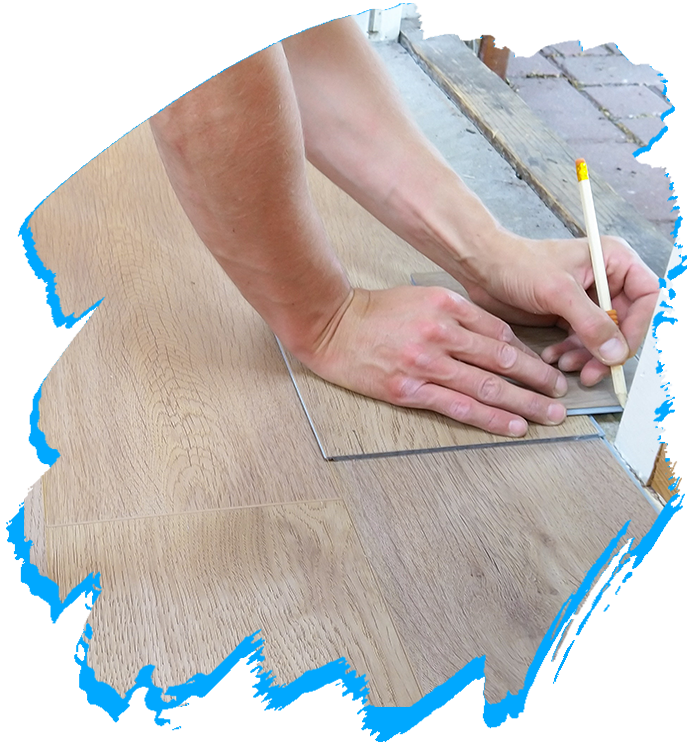
What a Flooring website needs

A gallery sorted by what the floor actually is

LVP and LVT in one place, engineered hardwood in another, solid hardwood, tile and carpet in their own. A homeowner shopping vinyl plank should not have to scroll past twelve tile bathrooms to find the thing she is buying.

Before-and-after pairs shot from one spot

Old carpet and tack strip out, new floor down, same corner, same angle. Nothing sells a tear-out and install faster than two photos a homeowner can line up in her head without working at it.

A plain page about the subfloor

Flatness tolerance, patching and grinding, squeak repair, moisture testing on a slab, vapor barrier. Written for a homeowner, not an inspector. This is the page that makes a careful customer stop shopping and call you.

Refinishing kept separate from new installation

Sand-and-seal is a different sale than replacement, and the person who has original oak under her carpet is asking a different question. Give dustless sanding, screen-and-recoat and full refinishing their own space.

A measure request that asks the right things

Rooms, rough square footage, stairs or no stairs, slab or crawl space, pets, what is down now. You walk into the first call already knowing roughly what the job is and whether it is worth the drive.

Click-to-call fixed where a thumb lands

Most of these people are on a phone. One tap, no pinching, no hunting a contact page. Phone leads in home services close better than anything else you will get, so make the phone the easy option.

The stairs, transitions and trim work spelled out

Treads, risers, landings, thresholds, reducers, shoe molding and baseboard. The fiddly, skilled, separately priced work that surprises homeowners later — far better they read it now than hear it as a change order.

A straight answer on who supplies the material

Which lines you carry and sell, what happens when someone buys flooring online, and where your responsibility starts and stops. Say it once in writing and it stops being an argument in somebody's kitchen.

Flooring services your site should cover

Luxury vinyl plank and tile (LVP and LVT)

Waterproof, kid-proof, dog-proof flooring that shrugs off spills, mud and claws. The usual landing spot for homes with pets or young children.

Engineered hardwood installation

A real wood wear layer over a stable core, so it goes where solid hardwood should not — over concrete slabs and in basements.

Solid hardwood installation

Nail-down oak, maple and hickory, acclimated in your home before a board goes down. Sand and refinish it decades from now instead of replacing it.

Hardwood sanding and refinishing

If there is solid wood under your carpet, or the finish has worn through the traffic lanes, refinishing usually costs less than replacement.

Dustless sanding

Sanding vacuumed straight to containment, so the dust stays out of your cabinets, vents and curtains and you can stay in the house.

Tile flooring

Porcelain, ceramic and stone for kitchens, baths and entries, set over a flat, prepared substrate so grout lines stay tight.

Carpet installation

Carpet and pad for bedrooms, stairs and family rooms, stretched in over new tack strip so it does not ripple a year later.

Tear-out and haul-away

Old carpet, pad, tack strip, staples, vinyl and tile pulled out and taken away. No weekend trips to the transfer station.

Subfloor repair and leveling

Dips patched, high spots ground down, soft decking replaced, squeaks quieted. A new floor shows every flaw left under it.

Moisture testing and vapor barrier

Slabs tested before anything goes down and the right barrier installed. Skip it and a floor cups or lifts, uncovered.

Stairs, treads and risers

Treads cut and finished to match, risers wrapped, nosing and landings done cleanly. Priced on its own because it is slow, skilled work.

Transitions, thresholds and trim

Reducers, T-moldings, thresholds, shoe molding and baseboard, so one room meets the next without a lip to trip on.

BuilderNow compared with doing it yourself

BuilderNow DIY website builders
Who builds it We do. You send photos and tell us about your work on a phone call. You do, from a template, in the evenings after a day on your knees.
What it costs $25/month or $250/year with the domain name, hosting and support included. A plan fee, then the domain renewal and extras usually billed separately.
The words on the page Written in flooring terms — nail-down, floating, waste factor, sand-and-seal. Generic contractor placeholder copy that you rewrite yourself.
Making a change Email us the new photos or the new service and we update the site. You log back in, remember how the editor works, and do it yourself.
Phone layout Built phone-first, with the call button and measure request in thumb reach. Varies by template and by how carefully you set up the mobile view.
Trying it out 30 days free on a yoursite.buildernow.net address, custom domain on the paid plan. Free tiers typically run on the builder's own branded subdomain.

Why this matters for Flooring businesses

39.3% of homeowners start their search for a home services contractor on Google Search or Google Maps.

Mantel, 2025

69% of homeowners search for pricing online before contacting a contractor.

Mantel, 2025

Homeowners contact an average of 2.1 contractors before hiring.

Mantel, 2025

46% of phone leads convert during the call in home services, the highest of nine industries measured.

Invoca, 2025

Flooring website questions

Explain it. Homeowners do not know the vocabulary, but they understand that a new floor shows every dip underneath it. A short page on flatness, patching, grinding and squeak repair separates you from the crews who lay planks over whatever is there. Written plainly, it does two jobs: it builds trust, and it sets up the prep line on your estimate so it does not look like padding.

Frame it as protection rather than a problem. Say that concrete slabs get tested before material goes down, and that the right vapor barrier is part of the install. Add the reason: a moisture failure cups or lifts a floor, and it typically voids the manufacturer warranty, which leaves the homeowner paying twice. Customers rarely argue with a step that protects their own coverage once somebody explains why it exists.

Yes, before it reaches your voicemail. State what you supply, which lines you sell, and what you will and will not do with owner-provided material. Most installers will lay it but cannot stand behind a product they did not specify, and they will not eat a shortfall if the order came up short on waste factor. One clear paragraph online ends a conversation you would otherwise have in somebody's kitchen.

Shoot with the daylight, not against the window, and keep overhead lights off so you are not fighting two color temperatures. Get the camera low, around knee height, and shoot down the length of the planks to show grain and the run of the room. Empty the room, vacuum, and take the same shot before tear-out. Paired photos from one angle sell better than twenty pretty one-offs.

Give it its own page. The homeowner who just pulled up carpet and found original oak is asking a completely different question than the one buying new LVP, and she is searching different words. Use that space for what she wants to know: dustless sanding, screen-and-recoat versus a full sand-and-seal, how long the finish needs before furniture goes back, and when refinishing beats replacing.

It helps you. Stair treads and risers take real time per step and get priced on their own, and transitions, thresholds, reducers and shoe molding are the detail work homeowners never think about until the estimate. Listing them as their own line items online means they arrive expected instead of as a surprise, and it shows the person reading that you price from scope rather than from a flat square-foot guess.

Put it right up front, because it decides the material more often than anything else. A family with two dogs and a toddler usually lands on waterproof LVP once they understand the trade-offs against engineered or solid hardwood. Write that comparison in your own words, honestly, including what LVP gives up. Homeowners who feel helped rather than sold tend to call the person who helped them.

We do. You get on a call, tell us what you install, what you refuse to install, your area and how you like to work, and send photos from your phone. We write and build the pages from that. You read it over and tell us what is wrong, and we fix it. Nothing about the process requires you to learn a page builder or touch code.

The website, the domain name, the hosting and support, in one price — $25 a month, or $250 for the year. You start with a free 30-day trial on a yoursite.buildernow.net address, and the custom domain comes with the paid plan. Simple business websites are what this covers. Online stores, booking systems and custom features get quoted separately so you only pay for what you need.

Get your Flooring website online

You have the photos already. They are on the phone in your pocket, between a picture of a tack strip and a receipt from the supply house. Thirty days free is enough time to get them onto a real website, send the link to the next homeowner who asks, and see whether it changes who calls you.

The trial runs on your own yoursite.buildernow.net address and costs nothing. Floors sell in short windows — before the holidays, after the new year, when the house goes on the market — so the cheapest time to be findable is before the next one opens. Start the trial and we will build it.

Start your free 30-day trial