A Website for Drywall Contractors Who Would Rather Be Taping

When a homeowner spots a crack creeping out of a ceiling corner at nine at night, the contractor whose site explains finish levels, texture matching and dust control gets the call in the morning.

  • We build the whole site for you. No drag and drop, no logging in.
  • $25/month or $250/year, with the domain name, hosting and support included.
  • Free for 30 days on a yoursite.buildernow.net address.
Build Your Drywall Website

We build awesome
Drywall websites.

Fill out your information and in 3 simple steps your preview will be built, no coding necessary.

Pick a Domain

The beginning of your home on the web starts with a name.

Describe Your Business

Tell us a bit about your business; the services you offer, and your history.

Tell Us About You

Let us know how customers can best contact or reach you.

Unlimited Possibilities.
3 simple steps.

Watch this short video for a quick walk through on how simple it is to get your website online.

Get Your Business Online Within in Minutes

Website Design made easy. Just one click away.

Get Started

Why Drywall businesses choose BuilderNow

Fast, Friendly, Secure, Quality

Fully Secured

All of our websites are fully secured with SSL encryption as well as top of the line servers.

Best Performance

Our web hosting servers have an uptime of 99.99%. Host with us hassle free with an online gurantee.

What a weak website costs a Drywall business

The 9pm ceiling crack search

A house that closed fourteen months ago, a hairline crack walking out of the corner above a door, two nail pops in a line down the ceiling. The homeowner is on the couch with a phone, and all they want to know is whether this is normal first-year settlement or something worse. With no site of your own, they read somebody else's explanation, then call that somebody.

The leak got fixed, now nobody knows who cuts the ceiling out

A supply line or a roof valley let go, the plumber or roofer handled their part, and what is left is stained, sagging board and tape joints that have let loose. The homeowner does not know somebody has to cut back past the wet material to find where the damage stops, or that the cavity has to dry first. Nothing online says you do that work, so the call goes to a restoration outfit that subs it out anyway.

Texture match goes to whoever will explain it

Half your repair calls are really texture questions. A patch in a wall sprayed with knockdown in 2003, a skip trowel kitchen, orange peel down a hallway, popcorn on a ceiling nobody wants to touch. These people were told "no problem" once before and then had to look at a square that catches the light forever. Whoever explains how matching actually works sounds like he has done it.

You read as somebody's side work

Hanging, taping and finishing are three separate skills, and you may do all three better than most crews in town. None of that shows on a phone. A builder's project manager, a remodeler shopping for a second crew, a homeowner about to pay for a Level 5 great room — they all check first. No website reads as a truck and a phone number.

How customers choose a Drywall company

You have two customers and they shop nothing alike. The homeowner searches a symptom, not a trade: ceiling crack repair, water stain on ceiling, popcorn ceiling removal, the hole a failed TV mount left. They are not looking for a drywall company yet, they want someone to tell them how bad it is. They land on whatever page explains the symptom and call from that page. Around two contractors get contacted before anyone is hired, so being the one who already answered is most of the job.

The builder, remodeler and property manager are deciding whether you are worth a trial run on one house. They want your scope: hang and finish or finish only, do you take ceilings, will you do a Level 5 on a long raking wall, can you handle a fire-rated garage assembly, do you come back for punch list and warranty work. That is a two-minute read in a truck, and if there is nothing to read they call the crew with a page.

Pricing gets looked up before you hear from anyone, and drywall is awkward about it because the work prices two ways. Hang and finish goes by the square foot or the board. A patch goes against a minimum, because masking, two or three coats across separate visits, sanding and texture cost the same whether the hole is doorknob sized or doorway sized. Saying so ends the call that opens with "it's just a little hole." Season stacks on top: hanging follows the builders, remodels bunch up in the cold months, storms bring water damage, and a new subdivision produces a wave of nail pops and settlement cracks.
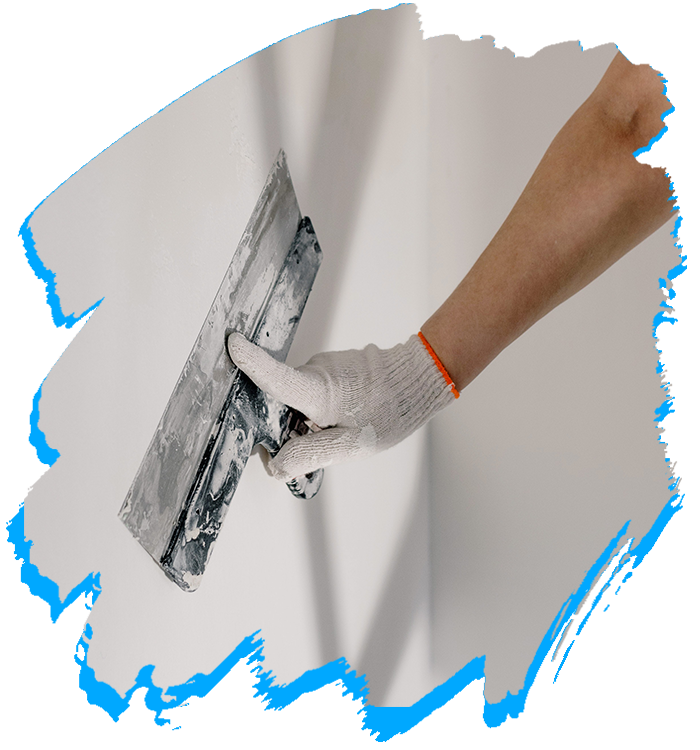
What a Drywall website needs

Level 1 through Level 5, in plain words

Most arguments in this trade are finish level arguments. A page saying which levels live behind a drop ceiling or in a garage, which suit heavy texture, and which one a wall with a window at the end of it needs sets expectations before you quote.

A texture page in your own words

Orange peel, knockdown, skip trowel, hand-troweled, acoustic popcorn. What each looks like, which come out of a gun and which off a trowel, and the truth about matching one on a patch. This is the page that turns browsing into a phone call.

Repair pricing that explains the minimum

Square foot pricing for hang and finish, and a stated minimum for patch work with the reason attached: masking, multiple coats across separate visits, sanding, texture, paint-ready handoff. Being upfront screens out the calls you did not want.

A dust and containment section

In an occupied house, dust is what people are really deciding about. Name what you do: plastic and zip walls, floor and furniture protection, HEPA vacuum sanding or a wet-sand approach, negative air where it is warranted, and what the room looks like when you leave.

Water damage repair with an honest boundary

For the homeowner whose leak was just fixed: cutting back to sound material to find where the damage ends, drying the cavity, replacing insulation, reboarding, taping, texture, paint-ready. Then where it stops being drywall work and becomes remediation, because naming that is why they trust the rest.

Scope laid out for builders

Hang, tape, finish, texture, ceilings, fire-rated and sound-rated assemblies, patch and punch, year-one warranty work. Say what you take and what you pass on, so a contractor can decide without calling you first.

A number that dials with one tap

Your number at the top of every page, tappable, on the phone they are already holding. In home services a live conversation closes work more often than anywhere else, so the site is built to start one.

Drywall services your site should cover

Drywall repair and patching

Holes from a door handle, a failed TV mount, a plumber's access cut or a furniture move. Cut back to solid backing, patched, taped, finished and textured so you stop noticing it.

Ceiling repair

Ceilings are the hard part of this trade: everything overhead, light raking across them all day, nowhere to hide a flat spot. Sagging board, failed tape joints, old stains and cracked corners, repaired to match.

Water damage drywall replacement

Once the leak is fixed, we cut back past the damaged material to find where it really ends, dry the cavity, replace insulation as needed, then reboard, tape, texture and leave it ready for paint.

Texture matching and retexturing

Orange peel, knockdown, skip trowel and hand-troweled finishes matched on a repair, or a whole wall retextured when matching is not worth chasing. We tell you which yours is first.

Popcorn and acoustic ceiling removal

Scraping an old sprayed acoustic ceiling, repairing the board underneath, refinishing smooth or with new texture. In a house of a certain age this is testing-first work, and we say so.

Level 5 smooth finish

A skim coat across the whole surface so board and joints take paint the same way. The finish for walls with a window at one end, glossier paint, and open rooms where every flaw shows under raking light.

New construction hanging and finishing

Full houses and additions on a builder's schedule, including ceilings, soffits and stairwells. Hanging, taping and finishing are separate skills and we staff them that way.

Nail pops and settlement cracks

A new house moves through its first year and the drywall reports it: popped fasteners in a line down a ceiling, hairlines walking out of door corners. Reset, repaired, retextured and blended.

Corner bead repair

Dented, split or rusted bead on an outside corner, usually courtesy of a dolly, a bike or a vacuum. The damaged section comes out, new bead goes in straight, then coated and textured back in.

Garage, basement and attic finishing

Unfinished space turned into finished rooms, including the fire-rated assemblies a garage ceiling or shared wall calls for. Insulation, board, tape, finish and texture to the level the room needs.

Demo, remodel prep and punch list

Walls and ceilings taken down cleanly ahead of a remodel, closed back up once the other trades are through, and the punch list worked so the job gets signed off.

BuilderNow compared with doing it yourself

BuilderNow DIY website builders
Who builds the site We do. You send us your information and we build it for you. You do, in an editor, on your own time.
What it costs $25/month or $250/year, with the domain name, hosting and support included. A monthly plan fee, with the domain and some add-ons often billed separately.
Writing the drywall pages We write the finish level, texture and repair pages with you. Blank templates, or stock text written for no trade in particular.
Your time A conversation and some photos, then back to work. Evenings learning an editor, then more of them keeping it current.
Making changes later Tell us what changed and we change it. Support is part of the price. You log back in and do it, or pay someone to.
Trying it first 30 days free on a yoursite.buildernow.net address, custom domain on the paid plan. Varies by provider.

Why this matters for Drywall businesses

39.3% of homeowners start their search for a home services contractor on Google Search or Google Maps.

Mantel, 2025

69% of homeowners search for pricing online before contacting a contractor.

Mantel, 2025

52.5% of homeowners use online reviews to judge a contractor's quality before making contact.

Mantel, 2025

46% of phone leads convert during the call in home services, the highest of nine industries measured.

Invoca, 2025

Drywall website questions

Yes, because almost nobody outside the trade knows there are five. A short page saying Level 1 is fire taping above a drop ceiling, Level 2 suits garages, Level 3 works under heavy texture, Level 4 is the standard flat finish and Level 5 is a full skim coat lets a customer choose on purpose. It also gives you something to point at when two bids differ.

It helps a lot. Level 4 means joints and fasteners are coated flat, but the paper face and the compound still take paint differently, so under raking light from a window or a sconce you read every joint. Explain that before you quote and the customer either buys the skim coat or accepts the finish they picked. Settled in writing, not on the walk-through.

Completely, and it will win you work. Matching sprayed knockdown or orange peel depends on the original gun, tip, air pressure, mud thickness, knockdown timing and how much paint built up since. Hand-applied skip trowel depends on whose hand did it. Say a small patch may be close rather than invisible, and that retexturing corner to corner is how it disappears.

Say what the job involves and where the caution sits. Scraping a sprayed acoustic ceiling means wet work overhead, repairing the board underneath, then refinishing smooth or with new texture. In houses of a certain age the honest answer is testing before anything is disturbed. Saying that reads as more competent than promising a one-day ceiling.

Put the specifics, because dust decides repair jobs in an occupied house. Name it: plastic and zip wall containment around the work area, floor and furniture protection, HEPA vacuum sanding or a wet-sand method where it suits, negative air when the job warrants it, and how the space looks at the end of each day. That paragraph sells by itself.

Very, and your site should say so. On a gut or new build the whole structure is a work zone and sanding dust goes where it likes. In a lived-in house with a kitchen, pets and somebody working from a bedroom, containment, air direction and daily cleanup are part of the scope and the price. Explaining both keeps homeowners from pricing you against a tract-house number.

Show both and explain the difference. Hang and finish prices by the square foot or the board, so a range is fair. Repairs price against a minimum, because masking, two or three coats across separate visits, sanding and texture cost nearly the same for a fist-sized hole as a four-foot one. The minimum stops the wrong calls before they reach you.

Mention both and draw the line. Say you cut back past the stained or soft material to find where the damage actually stops, dry the cavity, replace insulation, then reboard, tape, texture and leave it paint-ready. Then say where it stops being a drywall job and becomes remediation. Being the contractor who names that boundary is usually why you get the drywall half.

A conversation and whatever you already have: your phone number, the work you want more of, the areas you cover, and photos off your phone. We write and build the pages, including the finish level and texture explanations, and you review them. You never log into an editor, and later changes come to us. Support is included in the $25 a month.

Get your Drywall website online

The 30-day free trial puts a real site on a yoursite.buildernow.net address with nothing to pay and nothing to set up. Send your number, your service area and some photos off your phone, and we build the pages: finish levels, textures, repair and water damage work, dust control, and the scope a builder reads in two minutes.

Use the 30 days the way you would use a trial run on one house. See what calls come in and what the repair and texture pages do for the quality of them, then decide. Keeping it is $25 a month or $250 a year, domain, hosting and support included, and that is when the custom domain goes on.

Start your free 30-day trial