When somebody holds up a magazine photo of a window seat and asks what it would cost, does your site start that conversation, or do they go find a carpenter whose site does?
Fill out your information and in 3 simple steps your preview will be built, no coding necessary.
The beginning of your home on the web starts with a name.
Tell us a bit about your business; the services you offer, and your history.
Let us know how customers can best contact or reach you.
Watch this short video for a quick walk through on how simple it is to get your website online.
Website Design made easy. Just one click away.
Get StartedFast, Friendly, Secure, Quality
All of our websites are fully secured with SSL encryption as well as top of the line servers.
Our web hosting servers have an uptime of 99.99%. Host with us hassle free with an online gurantee.
Carpentry is two trades wearing one word. Somebody searching for wall framing and an addition does not want a bookcase, and somebody searching for crown molding does not want a framing crew. With no site, both searches land on the same bare listing and both people guess wrong. Half the calls you take are for work you do not do, and the ones you wanted went to whoever said so plainly.
A customer saves a photo of a window seat with paneled sides and shaker doors, then expects a number in the same conversation. You cannot give one until you know species, paint grade or stain grade, the wall it is going on, and whether the floor and ceiling are anywhere near level. Without a page that walks through how a price gets built, you sound evasive and the cheapest guess wins.
A cabinet, a stair rail or a run of lockers gets built on your benches first, then installed in a few days instead of lived through for three weeks. Shop time is the whole reason your work fits. Nothing online says it, so a homeowner prices you against a guy with a miter saw in a driveway and cannot see why the numbers are so far apart.
Custom work means walnut cut to somebody's wall and material money leaving before a single joint is cut. If the first time a customer hears about a deposit is on the phone, it sounds like a risk. If your site already explained why material gets bought once drawings are signed, the deposit is just the next step.
Two completely different customers find you, and they search nothing alike. The homeowner searches the thing, not the trade: built-in bookcase, window seat with storage, mudroom lockers, crown molding installation, stair railing replacement. The general contractor or remodeler searches for a finish carpenter or a framing crew by name, because they need to know your scope before they put you on a schedule. Around two contractors get contacted before anyone hires, so the page that answers first is doing most of the selling.
Then they check. Pricing is looked up before you ever hear a phone ring, and carpentry is awkward about it because the same bookcase prices three ways depending on whether it is paint-grade poplar, white oak, or walnut, and whether it is a face frame build or frameless with full-overlay doors. Reviews get read to judge whether your joints hold up and whether you cleaned up. A site with honest ranges and a straight explanation of how shop drawings turn an idea into a fixed number survives that check. Silence does not.
Season moves the work, and the site should move with it. Interior built-ins, trim, wainscoting and stair work cluster in the cold months, and much of it is tied to a date: the dining room paneled before family arrives, the lockers in before school starts. Deck framing and pergolas fill the warm end of the year. Solid wood notices all of it, which is why a panel has to float in its groove and why a door that fit in August can bind in February. Customers who read that before it happens call you with a question instead of a complaint.
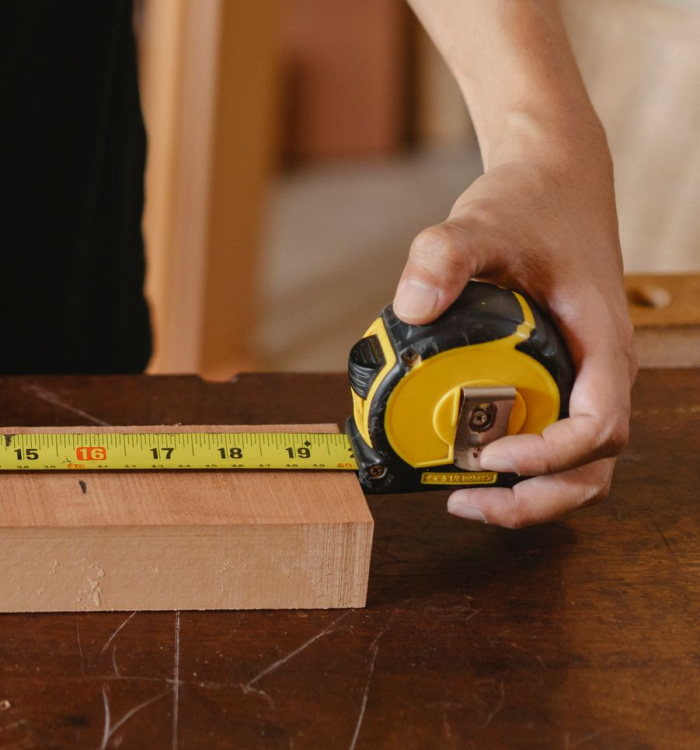
A page for rough framing — walls, floor systems, additions, remodel structure — and a separate page for finish carpentry. Each says what it is and what it is not, so the person who needs one does not have to call to find out you do the other.
Bookcases flanking a fireplace, a window seat under a bay, mudroom lockers with a bench and hooks, a pantry wall, an office desk run. Named rooms and realistic dimensions let a homeowner recognize their own house and start the conversation already halfway informed.
Paint-grade poplar, maple, white oak, walnut, cherry. What each costs relative to the others, which take stain evenly, and why a walnut version of the same cabinet is not a small upgrade. This page ends a lot of sticker shock.
Site measure, a shop drawing and cut list for you to approve, material ordered against the signed drawing, shop build, then install days. Spelling out that sequence, including where the deposit sits, makes a custom quote a process instead of a number pulled from the air.
Crown molding, baseboard, door and window casing, chair rail and wainscoting, with the difference between a single-piece profile and a built-up one. Most people know what they want and not what it is called, so the page lets them point.
Treads, risers, skirt boards, newels, handrails and balusters, plus the baluster spacing and handrail height a railing has to hit to pass inspection. Saying it plainly separates you from whoever is about to build a rail a kid can slip through.
Your phone number at the top of every page, tappable, on the phone they are already holding. In home services a live conversation closes work more often than in any other industry measured, so the whole site is built to start one.
Shelving and cabinets built to your wall instead of bought to fit it. Flanking a fireplace, filling an awkward alcove, or running floor to ceiling in an office, scribed to the wall so there is no gap.
A bench under a window with storage underneath, paneled sides, and a lid or drawers depending on how you plan to use it. Built to the opening you actually have, which is rarely square.
Open lockers with hooks, a bench at sitting height, a shoe cubby below and a shelf above. One per person, sized to the coats and bags that currently live on the floor.
Trim run through a room or a whole house, with corners cut and coped to stay tight. We can match an existing profile in an older home or build up a larger one from stock pieces.
Board and batten, shaker panels, beadboard or a raised-panel wainscot with a cap rail. Laid out so the panel widths look deliberate instead of landing wherever the math fell.
New treads and risers over a tired staircase, a skirt board scribed in, and a railing with newels and balusters spaced to meet code. Carpet stairs turned into stained hardwood is one of our most common requests.
Face frame cabinets for a traditional look with a visible frame, or frameless with full-overlay doors for a flush modern face and a little more usable space inside. We explain the trade-off before you choose.
Interior doors hung in new or existing openings, hinges and strike plates mortised flush, and the slab planed and shimmed until it closes the same in every season.
Walls, floor systems, roof framing, additions and the structural side of a remodel, including headers where a wall is coming out. Framed straight and plumb so the finish trades have something to work against.
Deck framing, decking, stairs and railings, plus pergolas, arbors and privacy screens. Built with fasteners and species chosen to sit outside.
| BuilderNow | DIY website builders | |
|---|---|---|
| Who builds the site | We do. You send us your information and we build it for you. | You do, in an editor, on your own time. |
| What it costs | $25/month or $250/year, with the domain name, hosting and support included. | A monthly plan fee, with the domain and some add-ons often billed separately. |
| Writing the carpentry pages | We write the built-ins, trim, stair and framing pages with you, in your words. | Blank templates, or stock text written for no trade in particular. |
| Your time | One conversation and some photos off your phone, then back to the shop. | Evenings learning an editor, then more of them keeping it current. |
| Making changes later | Tell us what changed and we change it. Support is part of the price. | You log back in and do it, or pay someone to. |
| Trying it first | 30 days free on a yoursite.buildernow.net address, custom domain on the paid plan. | Varies by provider. |
39.3% of homeowners start their search for a home services contractor on Google Search or Google Maps.
Mantel, 202569% of homeowners search for pricing online before contacting a contractor.
Mantel, 2025Homeowners contact an average of 2.1 contractors before hiring.
Mantel, 202546% of phone leads convert during the call in home services, the highest of nine industries measured.
Invoca, 2025The 30-day free trial puts a real site on a yoursite.buildernow.net address with nothing to pay and nothing to set up. Send your number, your service area and some photos off your phone, and we build the pages: built-ins, trim and wainscoting, stairs and railings, cabinetry, framing and outdoor work.
Use the 30 days the way you would use a shop drawing. Look it over, tell us what is wrong, and see what calls come in while the interior season is running. Keeping it is $25 a month or $250 a year with the domain name, hosting and support included, and that is when your own domain goes on.
Start your free 30-day trial