84% of US consumers searched online for a local business in the last three months, and the rancher with a cracked loader arm and the contractor pricing stair railings are both somewhere in that number.
Fill out your information and in 3 simple steps your preview will be built, no coding necessary.
The beginning of your home on the web starts with a name.
Tell us a bit about your business; the services you offer, and your history.
Let us know how customers can best contact or reach you.
Watch this short video for a quick walk through on how simple it is to get your website online.
Website Design made easy. Just one click away.
Get StartedFast, Friendly, Secure, Quality
All of our websites are fully secured with SSL encryption as well as top of the line servers.
Our web hosting servers have an uptime of 99.99%. Host with us hassle free with an online gurantee.
39% of consumers have declined to buy from a business specifically because it lacked a website. A ranch hand standing over a snapped bucket pin is not looking for a conversation yet. He wants to know whether you run a mobile rig and whether you can get to the field today. With nothing to read, he scrolls to the shop that tells him.
MIG, TIG and stick are three different jobs on three different machines. A caller with a cracked aluminum fuel tank needs TIG and the right filler rod, and a shop set up only for mild steel has to turn that work away. When no page says which processes you run, you take calls you cannot help with and never hear from the ones you could.
Some of your work rolls in on a trailer. Some of it cannot move at all — a gate post set in concrete, a loader arm, a stair stringer already bolted into a building. Customers rarely know which one they have. A site that separates field repair from bench work gets you calls that arrive already sorted, usually with photos attached.
A project manager pricing handrail and miscellaneous steel needs to know you can weld to a qualified procedure an inspector will sign off on, produce shop drawings, and hand over material certs with the delivery. That is the work with margin in it. He will not call around asking who might be able to — he calls the shop whose site already says so.
Welding has two completely different buying moments, and most shops only get found for one of them. The farm and ranch side is a breakdown: hay on the ground and the baler tongue cracked, a disc hitch sheared off in the worst week of the season. Those customers search on a phone while standing next to the broken machine, they search for mobile welding because the machine is not going anywhere, and they call whoever makes it obvious a rig comes to them. Farm and ranch customers turn into a steady base once you have them — the same operations call every season — but you have to be findable the first time, and that first time is almost always a breakdown.
The other half is planned, drawn and priced. A general contractor pricing egress railings, stair stringers or miscellaneous steel is comparing shops on capability rather than speed. Can you work to a certified welding procedure, will the shop drawings come back marked up correctly, do the material certs show up with the steel. A homeowner pricing an ornamental drive gate is doing something else entirely: looking at pickets, scrollwork and finish, working out whether your work matches the picture in her head. Both of those buyers read for a while before they dial, and both of them check your site against whatever else they have seen.
What almost nobody does is call around blind. People look for how you charge first — whether there is a travel charge on mobile calls, whether a five-minute weld on the bench still carries a minimum — and when there is no hint of it anywhere they assume the worst and keep looking. Once the call does happen, this trade closes on the phone. Two minutes about what cracked, what the material is and how thick it runs is usually enough for a yes. The website's whole job is to get that conversation started with the right person.
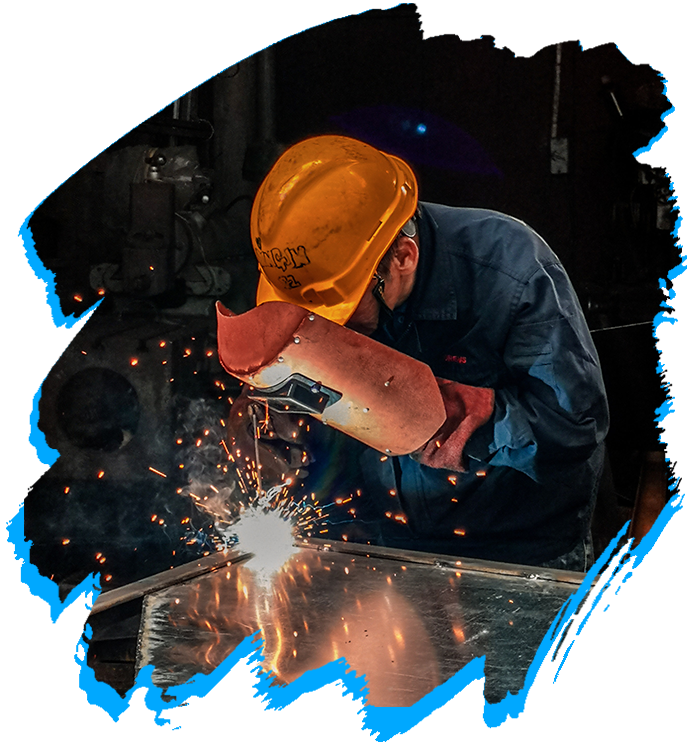
MIG, TIG and stick, each with what you actually use it for: MIG for production speed and thicker mild steel, TIG for aluminum, stainless and anything that has to look good, stick for dirty or outdoor structural repair. Callers sort themselves out before they dial.
Different filler, different settings, different skill level. If your shop genuinely does it, give it a page, because people search aluminum and stainless welding by name and that work pays better than mild steel.
What travels with the truck — welder, generator, grinder, plasma or oxy-fuel torch — and what you can realistically do standing in a field, a shop bay or a job site. It answers the only question a breakdown caller has.
AWS certification, certified welding procedures, shop drawings and material certs on commercial jobs. Project managers scan for exactly those words and stop reading when they are not there.
Your number as a tap target at the top of every page. The person reading is one-handed, outside, and standing next to something broken. Nobody is filling in a long form for that.
A drive gate, a run of handrail, a rebuilt bucket edge, a trailer tongue, a one-off bracket. Each photo tells a different kind of customer that you do their kind of work.
Half the jobs in this trade start as a phone picture or a drawing on a napkin. Let people send material, thickness and an image so you can price the easy ones without burning a trip.
When the broken thing cannot be moved, the rig comes to it — field, barn, job site or yard. Gates, equipment, structural repairs and anything already bolted or buried in place.
Loader arms, bucket edges, hitches, augers, feeders and corral panels. Repairs built heavier than the original so the same part does not crack again at the same spot next season.
Tongues, couplers, cross members, ramps and fender work on utility, stock and equipment trailers. Frame and coupler repairs done properly matter on anything that gets pulled on a highway.
TIG work on boat hulls, fuel tanks, ladders, ramps and truck accessories. Aluminum needs its own filler and its own touch, and plenty of shops send this work out.
Food-service tables, hoods, tanks, railings and dairy equipment. Clean TIG welds that stay corrosion-resistant instead of rusting out where the weld used to be.
Beams, columns, posts, embeds and miscellaneous steel welded to certified procedures, with shop drawings and material certs when the inspector or the GC needs them.
Interior and exterior railing, egress stairs and landings built to meet code on height, spacing and load. Measured on site, fabricated in the shop, set in a day where possible.
Driveway gates, courtyard gates, panels and estate fencing in pickets, scrollwork or flat-bar designs. Built to the opening you actually have, not to a catalog size.
The part nobody sells. Bring a sketch, the old broken piece or a measurement scribbled on a receipt, and it gets made once, right, out of the correct material.
Clean plasma cuts on plate and thinner stock, oxy-fuel for heavy sections and field work where there is no power. Demolition cutting and seized bolt removal too.
Building worn edges, teeth and wear plates back up with hard surfacing rod so ground-engaging equipment goes another season instead of being replaced.
| BuilderNow | DIY website builders | |
|---|---|---|
| Who builds the site | We do. You answer a few questions about your shop, your processes and whether you run mobile, then we build and write the whole thing. | You do. You pick a template and lay out every page yourself in an editor. |
| Who writes the service pages | We write them for your trade — mobile versus shop, the processes you run, aluminum and stainless, structural work, gates and railing. | You get placeholder text about a generic business and replace it line by line. |
| What the price covers | $25/month or $250/year, including the domain name, hosting and support in one number. | A plan fee for the editor and hosting. The domain and extras are usually separate. |
| Changing something later | Send us the change — a new service, a new number, photos from last week's gate job — and we make it. | You log back in, find the right page and edit it yourself between jobs. |
| Trying it first | 30 days free on a yoursite.buildernow.net address, with your own domain once you go paid. | Free tiers and trials exist, usually on the builder's own subdomain with its branding. |
| Stores and custom features | The $25 plan is a simple business website. Online stores, booking systems and custom work are quoted separately. | Normally an upgrade to a higher tier, still built by you. |
84% of US consumers searched online for a local business in the last three months.
BrightLocal, 202639% of consumers have declined to visit or buy from a business specifically because it lacked a website.
DreamHost, 202658% of consumers often or always check a business website to confirm information they saw elsewhere.
DreamHost, 2026You get 30 days free on a yoursite.buildernow.net address. That is long enough to see your own processes, your mobile rig and your real photos on a page, and to send the link to the next person who asks whether you weld aluminum.
If it fits, it is $25/month or $250/year with the domain, hosting and support included. If it does not, you walk away having paid nothing. The trial starts the day you ask, not the day you find a free weekend to learn web design.
Start your free 30-day trial