A Website for Excavation Contractors, Built Around Your Iron

Excavation is supposed to run on handshakes and repeat general contractor work, right up until the GC vetting a new sub and the homeowner whose septic just failed both look you up before they dial.

  • We build the whole site for you, with no editor to learn
  • $25/month covers the domain, hosting and support
  • Free for 30 days on your own buildernow.net address
Build Your Excavation Website

We build awesome
Excavation websites.

Fill out your information and in 3 simple steps your preview will be built, no coding necessary.

Pick a Domain

The beginning of your home on the web starts with a name.

Describe Your Business

Tell us a bit about your business; the services you offer, and your history.

Tell Us About You

Let us know how customers can best contact or reach you.

Unlimited Possibilities.
3 simple steps.

Watch this short video for a quick walk through on how simple it is to get your website online.

Get Your Business Online Within in Minutes

Website Design made easy. Just one click away.

Get Started

Why Excavation businesses choose BuilderNow

Fast, Friendly, Secure, Quality

Fully Secured

All of our websites are fully secured with SSL encryption as well as top of the line servers.

Best Performance

Our web hosting servers have an uptime of 99.99%. Host with us hassle free with an online gurantee.

What a weak website costs a Excavation business

The myth that dirt work sells itself

Excavation runs on relationships, so a website is a waste of money. That is the story. Then a builder needs a new sub because his dirt guy is three weeks out, and he types your name into Google before he types it into a text message. Whatever comes up in those ten seconds decides whether he sends you the plan set or keeps scrolling.

Your iron is your resume and nobody can read it

A commercial client wants to know what you can actually put on the ground. A mini excavator and a skid steer is a different company than one running a dozer, a 35-ton machine and three tandem dumps. When that list lives only in your head, every new client has to call and ask, and most just call the outfit whose equipment page they already found.

The insurance question stalls the bid

Before a general contractor puts you on a job he wants a certificate of insurance naming him as additional insured, and on public work he wants to know you are bondable. Contractors who cannot answer that in writing get screened out before the walkthrough. A page that states you are insured and bonded, and that a COI goes out the day it is requested, clears the first gate.

Homeowner work goes to whoever shows up online

A failing septic tank, a back yard that holds water all spring, a driveway washed out after a storm, a pond that silted in. None of that arrives through a builder. It comes from somebody searching cold with no referral and no patience. Those jobs pay well, and they go to the excavator who is findable, not the one with the longest client list.

How customers choose a Excavation company

A general contractor or developer looking at a new sub is not shopping, he is checking. Somebody already gave him your name. He wants to see the size of machine you own, how many operators you run, whether you have dug the kind of hole sitting in front of him, and whether the insurance and bonding hold up. He is doing it on a phone in a job trailer, between the framer and the inspector. A site that answers those four things in one screen moves you onto the bid list.

Homeowners come at it from the other direction. They search for a septic installer, an excavating company, somebody to fix the water standing against the foundation, and the first thing they want is a number. Nobody can quote a basement dig from a phone call. Depth, soil type, rock, groundwater, how far a truck has to haul the spoil and what the dump charges a load all move the price more than square footage does. The callers worth your drive time are the ones who read that first and understood why you have to walk it.

Then there is the calendar, which runs this trade hard. Spring is mud and nobody can get a machine across a lawn. Summer is pond work, septic systems and basements. Fall is the rush to get footings in and pads graded before the ground closes up. Once frost gets down past a couple of feet, digging gets expensive and finish grading stops entirely, and a site that says so plainly saves you half the phone calls you would otherwise have to talk people out of.
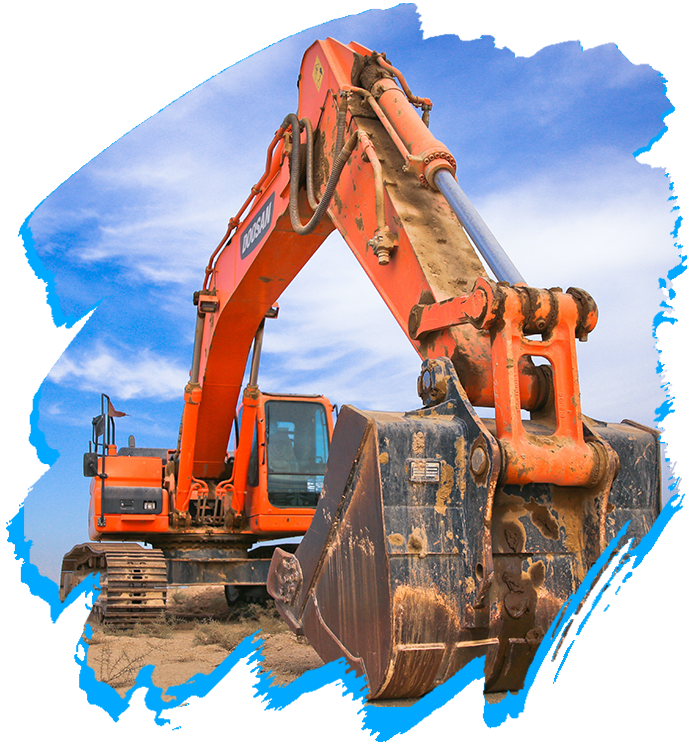
What a Excavation website needs

An equipment list that works as a credential

Make and size of every machine you run, from the mini excavator and skid steer up through the dozer, the tandem dumps, the rock hammer and the laser-grade box. Commercial clients read it as capacity. Homeowners read it as proof you are a real outfit and not a guy with a rented backhoe.

An insurance and bonding page

General liability limits, workers comp, and a plain line saying you will issue a certificate of insurance naming the GC as additional insured. If you are bonded for public work, it says that too. This is the first page a commercial client opens and the one most excavation sites do not have.

A page for each kind of dig

Basements and footings, septic systems, utility trenching, pond work, demolition, grading. Somebody searching for a perc test and somebody who needs a building pad are two different customers, and one page trying to be both loses them both.

A quote form built around site conditions

Ask the things you would ask on the phone anyway. Gate and access width, slope, known rock or ledge, whether utilities have been located, how far the nearest dump is. You show up to the walkthrough already knowing what you are looking at.

Click-to-call on every screen

Your buyers are reading from a truck cab or a job trailer on a weak signal. One tap on the number, and pages that load fast on a phone.

A plain explanation of locates and site visits

Why the 811 call comes before the shovel, what a private locate covers that a public one does not, and why you walk a site before you give a number. It sets expectations and it tells a careful client you work by the book.

Photos that show finished grade

Not just a machine in a pile of mud. A pad that holds laser grade, a swale that drains, a trench backfilled and compacted, a driveway with base rock in. That is what someone burned by a cheap dig looks for.

Excavation services your site should cover

Site clearing and grubbing

Brush, stumps, roots and topsoil stripped off so the ground underneath can be built on. We stockpile what is worth keeping and haul off the rest.

Basement and foundation excavation

Digging to grade for a full basement, crawl space or slab, with footing trenches cut clean and the bank cut back where soil will not hold. Spoil is stockpiled for backfill or hauled away.

Building pads and land leveling

A level, compacted pad for a house, shop or barn, built up or cut down to the elevation on the plan. Uneven acreage gets reshaped so water runs away from the structure.

Septic system installation and repair

Tank set, lines laid and drain field built to the layout your soil test supports. We also open up and repair failing systems, replace crushed lines and locate buried tanks.

Utility trenching

Trenches for electric, gas, fiber, conduit and irrigation, dug to depth and backfilled and compacted so the ground does not settle over them. Everything is located before we cut.

Water and sewer line installation

Running a new water service or sewer lateral from the main to the building, including road and driveway crossings. Old failing lines get replaced and the surface put back.

Drainage and erosion control

French drains, curtain drains, culverts, swales and dry wells to pull water off a wet yard or away from a foundation. We cut the grade so the water leaves on its own.

Driveway and access road construction

New driveways and farm or logging access roads, cut and crowned, with base rock placed and compacted. Washed-out drives get rebuilt instead of patched again.

Grading and compaction

Rough grade through final grade, compacted in lifts and finished to laser grade where the plan calls for it. That is what keeps a slab flat and a lot draining the way it was designed to.

Pond digging and cleanout

New ponds dug and keyed in so they hold water, and existing ponds cleaned out when silt and cattails have taken over. Dams and banks get shaped and seeded.

Demolition and haul-off

Houses, barns, sheds, slabs, pools and old foundations taken down, with the debris loaded out and disposed of. Dump and tipping fees are itemized so you can see what they are.

Rock removal and stump removal

Breaking out ledge and boulders with a hydraulic hammer when a dig hits rock, and pulling or grinding stumps so a site can be graded. Both get quoted after we see what is down there.

BuilderNow compared with doing it yourself

BuilderNow DIY website builders
Who builds it We do, from one conversation about your machines and your work You do, in an editor you have to learn first
What it costs $25/month or $250/year, domain and hosting included A plan fee, with the domain and add-ons billed separately
What you have to supply Your equipment list, insurance details and job photos Every page, every photo and all the writing
Excavation-specific pages Written around septic, basements, trenching, grading and haul-off Blank template sections you fill in yourself
Changes later You send us the new machine or service and we add it You log back in and rebuild the page yourself
Support Included, by a person who knows your site Help articles and a ticket queue

Why this matters for Excavation businesses

39.3% of homeowners start their search for a home services contractor on Google Search or Google Maps.

Mantel, 2025

69% of homeowners search for pricing online before contacting a contractor.

Mantel, 2025

58% of consumers often or always check a business website to confirm information they saw elsewhere.

DreamHost, 2026

66% of consumers say they would be more likely to hire a contractor or home services provider that has a website.

DreamHost, 2026

46% of phone leads convert during the call in home services, the highest of nine industries measured.

Invoca, 2025

Excavation website questions

Yes, and briefly. A short paragraph saying every job starts with an 811 locate request tells a client you are not the outfit that puts a bucket through a gas line or cuts a fiber trunk. Those hits get expensive fast and the liability lands on whoever dug. It also explains the waiting period, which is the main reason you cannot start tomorrow.

Because square footage is the smallest part of it. Soil type decides whether the bank stands up or has to be benched back, and rock changes the machine and the hours. Depth, groundwater, haul distance and dump fees all move the number more than the footprint does. Say that on the site, offer a walkthrough instead, and callers will already expect it.

Gate and side-yard width is the big one, because a machine that will not fit through a six-foot gate changes everything. Also ask about overhead lines, soft lawn, slope, a septic field or sprinkler lines in the path, and whether a section of fence can come out. Put those questions in the quote form and you stop losing half a day on sites nothing can reach.

Explain that soil drives cost more than size does. Sand caves and needs a wider cut, clay holds but turns to glue when wet, and ledge or boulders mean a hydraulic hammer and a slower day. Tell visitors that a test pit or a soil report is what makes a firm number possible. It reads as experience instead of as a hedge on your price.

It should. Plenty of homeowners have no idea the water table sits a few feet under their yard until a hole starts filling. A short note that a high water table may mean pumping, a dewatering setup, a shallower footing design or waiting out a wet season prepares people for a conversation they will otherwise take as an upcharge.

Yes. Most people searching for a septic installer do not know a perc test comes first, or that the result dictates the size and type of system their lot can support. Explain what the test involves, who performs it in your area, and that a failed rate can mean an engineered or mound system. It sets up the price difference before anyone is surprised by it.

It should say something. Once frost is down past a foot or two, digging takes longer, costs more, and finish grading and seeding are off the table until thaw. Footings still have to go below frost depth. A line about what you can and cannot do in winter in your area, and what is better booked for spring, saves a lot of explaining on the phone.

For commercial work it is one of the strongest pages you can have. A general contractor is matching his site to your capacity, so he wants to see the machine sizes, the dumps and the attachments in writing. Pair it with your insurance limits and a note that you will name him as additional insured on a COI, and you have answered his two questions without a phone call.

A complete website that we build for you, plus the domain name, the hosting and support, all in the one price. You do not drag anything around or learn an editor. Send us your equipment list, your service details, your insurance information and whatever job photos you have, and we write and assemble the pages. It is $25 a month or $250 a year.

Get your Excavation website online

The free trial runs 30 days on your own yoursite.buildernow.net address, and there is nothing to install or learn. Send us your equipment list, the kind of digs you want more of, and a handful of job photos. We build the site and you look at it.

The next GC who needs a sub, and the next homeowner whose drain field gives out, are both going to look for somebody this week. Start the trial now so there is something to find, and move to a custom domain on the paid plan when you are happy.

Start your 30-day free trial