Most people assume custom metal is a commercial-only budget item and never ask about the railing they actually want — the shop showing finished work and a starting range is the one that gets asked.
Fill out your information and in 3 simple steps your preview will be built, no coding necessary.
The beginning of your home on the web starts with a name.
Tell us a bit about your business; the services you offer, and your history.
Let us know how customers can best contact or reach you.
Watch this short video for a quick walk through on how simple it is to get your website online.
Website Design made easy. Just one click away.
Get StartedFast, Friendly, Secure, Quality
All of our websites are fully secured with SSL encryption as well as top of the line servers.
Our web hosting servers have an uptime of 99.99%. Host with us hassle free with an online gurantee.
Homeowners think a fabricated railing or a steel-framed interior door belongs in a downtown lobby, not a remodel. A one-off handrail is often closer to a good appliance than a renovation, and it outlives three sets of cabinets. Nobody learns that from a phone call they never make. They learn it from a page that shows a finished stair and says what a project like it starts at.
45% of consumers say businesses without websites feel less real, and an architect specifying a cable railing system is making exactly that judgment. She has a name on a sticky note and a client meeting Thursday. If there is no site showing shop drawings, finishes and completed installs, she specifies the shop she can verify in two minutes instead.
Floating treads on a steel stringer, a Corten planter screen, a moment frame for a wall somebody wants gone, 316 stainless for a coastal kitchen, a CNC-cut address panel. Those are five different buyers with five different budgets. A single vague page about metal fabrication reaches none of them, so the calls that come in are the ones you least want to price.
Powder coat or wet paint. Hot-dip galvanizing or blackened and waxed. Hot rolled with the mill scale left showing, or cold rolled smooth. You answer the same four questions every week before a project is even real. Put them in writing once and the person who calls has already picked a direction.
There are two routes into a fabrication shop and they look nothing alike. The trade route runs through architects, interior designers, general contractors and stair builders, and it is a vetting process rather than a search. They are checking whether you produce shop drawings, whether you will sit through an approval loop and come back with revisions marked correctly, and whether the railing you install will satisfy the load requirements a building inspector signs off on. Completed installs come first, then any sign that you work from drawings rather than guesses.
The homeowner route starts with a picture. Someone saves a photo of a steel-and-glass partition or a blackened range hood, searches for a local shop, and lands wherever the work looks closest to what they saved. 69% of homeowners search for pricing online before contacting a contractor, and almost no fabrication shop gives them anything to find. That silence confirms the thing they were already afraid of. A starting range on a straight run of handrail, a simple drive gate or a single steel door costs you nothing and stops the people who could afford you from quietly deciding they cannot.
Both buyers also read for signals that you understand the parts outside the shop. Material cost on steel moves, so a quote carries a validity window. Lead time is often set by the powder coater or the galvanizer rather than by your bay. A designer who sees that spelled out treats you as a professional operation rather than a risk, and by the time she calls, the conversation is about dimensions and finish instead of trust.
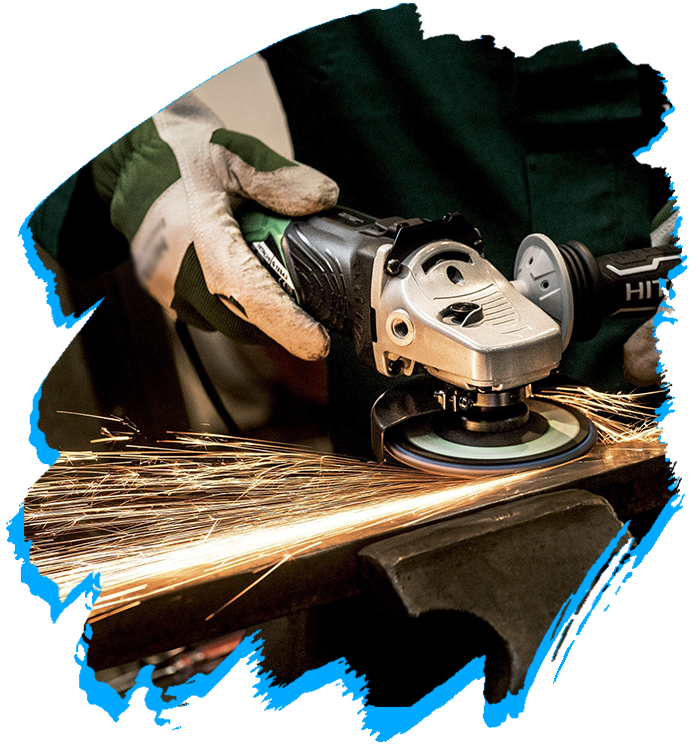
Steel stair stringers, floating treads, cable and glass railing systems, steel-framed interior doors and windows, range hoods, fireplace surrounds. This is the work designers specify by name, and it is usually the work with the best margin in the shop.
Beams, columns, posts and moment frames for the homeowner who wants a wall opened up. The contractor reading it needs to know you work from an engineer's drawings and can get steel set without holding up his job.
Powder coating, wet paint, hot-dip galvanizing, blackened and waxed, and raw hot rolled with the mill scale left on because the designer asked for it. One page that says where each one belongs, indoors or out, and roughly what it adds.
A wide shot of the stair and a close shot of the weld, the bend, the hardware. People buying custom metal are buying a surface they will run a hand along every day, and they look at detail first.
Most of this work arrives as a phone picture, a screenshot or a sketch on a napkin. Let people upload the image and give you opening width, floor-to-floor height and the finish they have in mind, so the easy ones can be priced without a site visit.
A linear-foot range on plain handrail, a starting figure on a single steel door or a simple gate. Not a quote. Enough that a homeowner stops assuming custom steel is a commercial-only budget and asks the question.
Laser cutting, CNC plasma, press brake bending, welding and finishing, plus the plate thicknesses you handle and the tightest radius a given thickness will bend to. Specifiers want to know a decorative panel or a formed reveal is possible before they draw it.
Stringers, landings and treads fabricated to your stair opening and set on site. Floating treads cantilevered off a hidden steel spine give you the look people save photos of, engineered so the stair does not move underfoot.
Posts, top rails and tensioned cable or glass panel systems that keep a view open. Built and installed to the height, spacing and load requirements an inspector checks before signing off.
Interior runs, exterior stairs, balconies and ADA-style grab rails in steel or stainless. Measured in place rather than cut to a plan, because almost no finished wall is as straight as the drawing says.
Narrow-profile steel doors, pivot entries, interior partitions and fixed windows with slim sightlines. The look designers ask for by name, built to your rough opening with the glass and hardware included.
Beams, columns, posts and moment frames for opening a wall, adding a second story or carrying a long span. Fabricated from the engineer's drawings and delivered ready for the crew to set.
Driveway gates, courtyard gates, pedestrian entries and address walls built to the opening you have. Flat bar, tube, perforated plate or slatted designs, with or without automation hardware.
Custom hoods in blackened steel, brass or stainless sized to your range and your ceiling, plus counters, shelving and bar tops. The piece everybody in the kitchen looks at, so the seams and the finish matter.
Decorative screens, privacy panels, signage, address plaques and brackets cut from a drawing or a traced logo. Repeatable parts come out identical, which matters when a panel run has to line up across a facade.
Planters, screens, fire pits and water features in weathering steel that develops its own rust patina. Worth knowing up front: the runoff stains concrete and stone below it, so placement gets planned early.
Counters, railings, outdoor kitchens and hardware in the right grade for the setting. 316 stainless for coastal salt exposure, where standard 304 will start pitting within a few seasons.
| BuilderNow | DIY website builders | |
|---|---|---|
| Who builds the site | We do. You answer a few questions about your shop, your equipment and the work you want more of, then we build and write all of it. | You do. You pick a template and lay out every page yourself in an editor. |
| Who writes the project pages | We write them for architectural and structural fabrication — stairs, railings, steel doors, gates and finishes. | You get placeholder text about a generic business and replace it line by line. |
| What the price covers | $25/month or $250/year, including the domain name, hosting and support in one number. | A plan fee for the editor and hosting. The domain and extras are billed separately. |
| Adding last week's install | Send us the photos and a line about the job. We add it to the project pages for you. | You log in, resize the images and rebuild the gallery yourself after the shop closes. |
| Trying it first | 30 days free on a yoursite.buildernow.net address, with your own domain once you go paid. | Free tiers exist, usually on the builder's own subdomain carrying its branding. |
| Stores and custom features | The $25 plan is a simple business website. Online stores, booking systems and custom work are quoted separately. | Normally an upgrade to a higher tier, and still built by you. |
84% of US consumers searched online for a local business in the last three months.
BrightLocal, 202645% of consumers say businesses without websites feel less real.
DreamHost, 202639% of consumers have declined to visit or buy from a business specifically because it lacked a website.
DreamHost, 2026You get 30 days free on a yoursite.buildernow.net address. That is long enough to see your own stairs, gates and steel doors on a page, with the finishes spelled out and a starting range on what you build most often.
If it works, it is $25/month or $250/year with the domain, hosting and support included. If it does not, you walk away having paid nothing. The trial starts the day you ask, not the weekend you finally find time to build one yourself.
Start your free 30-day trial