When a hail line moves through and every homeowner on the block is looking up roofers at the same time, your website is what tells them you are local, licensed, and still going to be here next spring.
Fill out your information and in 3 simple steps your preview will be built, no coding necessary.
The beginning of your home on the web starts with a name.
Tell us a bit about your business; the services you offer, and your history.
Let us know how customers can best contact or reach you.
Watch this short video for a quick walk through on how simple it is to get your website online.
Website Design made easy. Just one click away.
Get StartedFast, Friendly, Secure, Quality
All of our websites are fully secured with SSL encryption as well as top of the line servers.
Our web hosting servers have an uptime of 99.99%. Host with us hassle free with an online gurantee.
Four days after a hail event, a pickup with plates from two states away is working the street. The homeowner takes the flyer, then types both names into their phone — yours too, because a neighbor mentioned you. One company shows a local address, a license and bond number, and photos of finished roofs in this county. The other shows nothing. The inspection goes to whoever looked real on a phone screen.
Yours is a full tear-off: shingles and felt off, rotten decking replaced, synthetic underlayment, ice and water shield in the valleys and along the eaves, new step and counter flashing, ridge vent with matching intake. Theirs is an overlay nailed over the old layer. On two sheets of paper those are just two numbers. If nothing explains the difference before you arrive, price is the only thing the homeowner can compare.
In a cold climate, tear-offs stop when the deck will not stay dry and shingles will not seal down. Crew hours collapse for two or three months, then spring books out in a week. The homeowners who watched a ceiling stain spread over the holidays are reading at nine at night in February, not calling. A website answers them during the part of the year your trucks are parked.
You meet the adjuster, the first scope misses drip edge and ice and water shield, and you file a supplement. The homeowner hears a word they do not know and starts wondering what you are pulling. Then they get a second opinion from a company whose website walks through the claim in plain English — inspection, scope, supplement, deductible — and the roof you found the damage on goes to them.
Roofing searches come in two shapes. The emergency one happens on a phone in the driveway in the rain, typing roof leak repair near me or hail damage roof plus the town name. That homeowner wants to see that you cover their town, that someone answers, and that you can get a tarp on it tonight. The planned one happens months out: a roof hits twenty years, an agent asks for a roof certification before closing, or a neighbor's tear-off gets the street talking.
Either way, they check. They look for a license number and proof of bonding, because most states require both and the homeowner has been told to ask. They look for manufacturer certification — GAF Master Elite, Owens Corning Preferred — partly as a quality signal and partly because the enhanced warranty only exists through a certified installer. They read the newest reviews first, since reviews from before the storm say nothing about how you handled it. And they look for evidence you are not a traveling crew: a street address nearby, a list of counties, the year you started, a local area code.
Then they compare a short list, not a long one. Two or three companies get a call or a form, usually the same afternoon, and the first to answer with a real inspection date is in front. A roof is one of the largest checks a homeowner writes outside of a vehicle, and a thirty-year decision made from a driveway comes down to which company looked like it would still be in business when the shingles start curling.
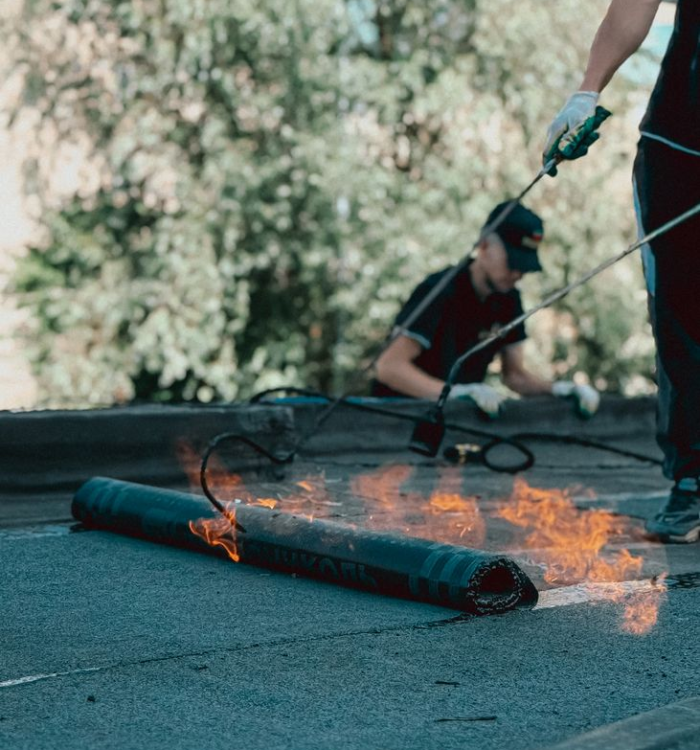
What to do in the first forty-eight hours after hail or high wind: stop the water, photograph the bruised shingles and dented gutters, call before the claim deadline. The company that explains it is usually the one that gets the inspection.
Stories, approximate squares, steep-slope or low-slope, how many layers are up there, where the leak shows inside, and room to attach photos. You arrive knowing whether to bring the ladder or the lift.
Street address, the counties and towns you cover, the year you started, your license and bond numbers. That is what separates you from the crews following the hail maps, and it belongs above the fold.
Not just finished roofs. Decking opened up and replaced, underlayment rolled out, ice and water shield in a valley, flashing cut into brick, ridge vent capped. Those photos show what your bid pays for.
Which manufacturers you are certified with, what the enhanced product warranty includes, and how that is different from your workmanship warranty. Homeowners mix the two up constantly, and the company that untangles it sounds like the honest one.
The order it happens in: free inspection, your documentation, the adjuster meeting, the scope, the supplement if items were missed, the deductible, the final payment. Written for someone filing their first claim in twenty years of owning the house.
TPO, modified bitumen and coatings on a strip mall or an addition over a porch are a different sale than shingles. One clear page keeps property managers from assuming you are residential only and calling someone else.
Water coming through a bedroom ceiling does not fill out a contact form. Your number sits fixed at the bottom of the phone screen, one tap, on every page of the site.
A complete tear-off down to the deck, so rotten sheathing gets found and replaced instead of hidden under new shingles. Fresh underlayment, flashing and ventilation, not another layer stacked on the old one.
Water rarely enters where the stain appears. We follow it back to the source — a lifted shingle, a failed pipe boot, a nail pop, open wall flashing — and fix that one.
If the roof is open after wind or a fallen limb, we get a tarp strapped down before water reaches your insulation and drywall. Fast, and documented for your insurance company.
A close look at the shingle mat, soft metals, vents and gutters to find bruising you cannot see from the ground. You get photos and a written finding either way.
We document the damage, meet your adjuster on the roof, and supplement the scope when required items like drip edge or ice and water shield are left out of it.
Architectural shingles installed to the manufacturer's nailing pattern, so the warranty actually holds. The underlayment and ventilation underneath get the same attention as the color you pick.
Standing seam and exposed fastener panels for a roof measured in decades rather than years. Heavier up front, excellent in snow and wind, and worth pricing next to shingles before you decide.
TPO, modified bitumen and coating systems for porch roofs, additions and commercial buildings. Low-slope roofs fail at the seams and drains, and need a different approach than anything shingled.
Ridge vent paired with enough soffit intake so the attic breathes. Poor ventilation cooks shingles from below and helps build the ice dams behind most winter leaks.
The places roofs actually leak. Step and counter flashing cut into masonry, new boots on every penetration, and skylights resealed or replaced while the roof is open.
Seamless gutter sized to carry what your roof sheds, pitched to drain, and discharging away from the foundation. Usually worth replacing while the roof crew is on site.
A documented condition report with remaining roof life, for a home sale, a refinance, or an insurer asking about roof age. No pressure to replace it today.
| BuilderNow | DIY website builders | |
|---|---|---|
| Who builds the site | We do. You tell us about your crew, your service area and the roofs you work on, and we write and build the pages. | You do, in a drag-and-drop editor, in the hours left after the last job. |
| What the price covers | $25 a month or $250 a year, including the domain name, hosting and support. | The plan fee, with the domain, email and add-ons usually billed separately. |
| Changes after launch | Send us the change — a new county, a new certification, this week's tear-off photos — and we make it. | You log in and make every edit yourself, including the ones from a truck. |
| What you have to learn | Nothing technical. You answer questions about roofing. | The editor, the templates, the settings, and whatever broke after an update. |
| Trying it first | 30 days free on a yoursite.buildernow.net address, with your custom domain on the paid plan. | Trial length and terms vary by provider. |
| Bigger features | Simple business sites are what the price covers. Online stores, booking systems and custom work are quoted separately. | Usually an app marketplace, each add-on with its own subscription. |
39.3% of homeowners start their search for a home services contractor on Google Search or Google Maps.
Mantel, 202552.5% of homeowners use online reviews to judge a contractor's quality before making contact.
Mantel, 2025Homeowners contact an average of 2.1 contractors before hiring.
Mantel, 202566% of consumers say they would be more likely to hire a contractor or home services provider that has a website.
DreamHost, 202646% of phone leads convert during the call in home services, the highest of nine industries measured.
Invoca, 2025Your next busy stretch is already set by the weather. The useful time to have a website is before the hail comes through, not during the week your phone is ringing anyway.
Start the 30-day free trial and we will build it on a yoursite.buildernow.net address while it costs you nothing. Read it, send it to a couple of past customers, ask for changes. If it is not right for your roofing business, walk away at the end of the 30 days. If it is, it stays at $25 a month with your own domain, hosting and support included.
Start your free 30-day trial