She is holding a size 8 that fits and a size 8 that does not, and your website is the one thing that can tell her which brands on your racks will fit her.
Fill out your information and in 3 simple steps your preview will be built, no coding necessary.
The beginning of your home on the web starts with a name.
Tell us a bit about your business; the services you offer, and your history.
Let us know how customers can best contact or reach you.
Watch this short video for a quick walk through on how simple it is to get your website online.
Website Design made easy. Just one click away.
Get StartedFast, Friendly, Secure, Quality
All of our websites are fully secured with SSL encryption as well as top of the line servers.
Our web hosting servers have an uptime of 99.99%. Host with us hassle free with an online gurantee.
A woman stands in her closet with two pairs of jeans, both labeled 8, one of which buttons. That is the whole problem with apparel, and it is also your biggest advantage over anything shipped in a bag. But she has to know which brands you carry and that somebody there will put the right size in her hand. If your page cannot tell her that, she orders three sizes online, keeps one, and never learns your name.
Your inventory is one-of-one. You post a jacket on Friday, it sells before dinner, and that post circulates for a month with people asking if it is still available. Social is where you sell, and nothing here says stop. But a feed cannot say what you carry in general, who fits in it, or how to reach you. A website holds the part that does not sell out: your brands, your sizes, your fit, your door.
She thinks she walks in on a Saturday and leaves with a gown. In reality it is a two-hour appointment booked weeks ahead, a gown ordered months out, and alterations built into the end of that timeline. Shops that never write this down lose brides to the chain that did, because the chain's page explained the process and yours asked her to call and find out.
Alterations, exchanges and final sale on special orders make a customer hesitate in the doorway, and almost no boutique puts them in writing. If she cannot find out what a hem costs, how long it takes, or whether an ordered size is refundable, she treats the purchase as a gamble. Written plainly, the same facts read as competence.
Apparel shopping starts on a phone, and it starts specific. Not boutique, but mother of the bride dresses, or prom dresses size 16, or square toe boots, or school uniform polos with embroidery. She wants a shop that carries her thing in her size, and she is looking between other errands. What she finds first is a map listing, a rating and a few photos, and the website answers what the listing is too small to hold: do you carry anything that will fit me, and will somebody help me find it.
Then she checks you. A boutique gets discovered on social and verified somewhere else. She saw a reel, liked three pieces, and now she wants a real address, real reviews and some sign the shop is still open and still curated by a person with taste. Reviews do heavy work here, because fit is personal and she reads them for whether people her size and her age left happy. The owner's eye is the actual product in this business, and the site either shows that eye or shows a template.
Timing is brutal and uneven. Prom compresses into roughly six weeks, with questions starting two months earlier and a register of which dress went to which school running the whole time, so two girls do not walk into the same gym in the same gown. Bridal runs on appointments booked weeks out and gowns ordered months out. Uniforms spike before school starts and whenever a company reorders. Western wear sells by event and season. A site has to carry the season that is on and still make sense in the quiet weeks between.
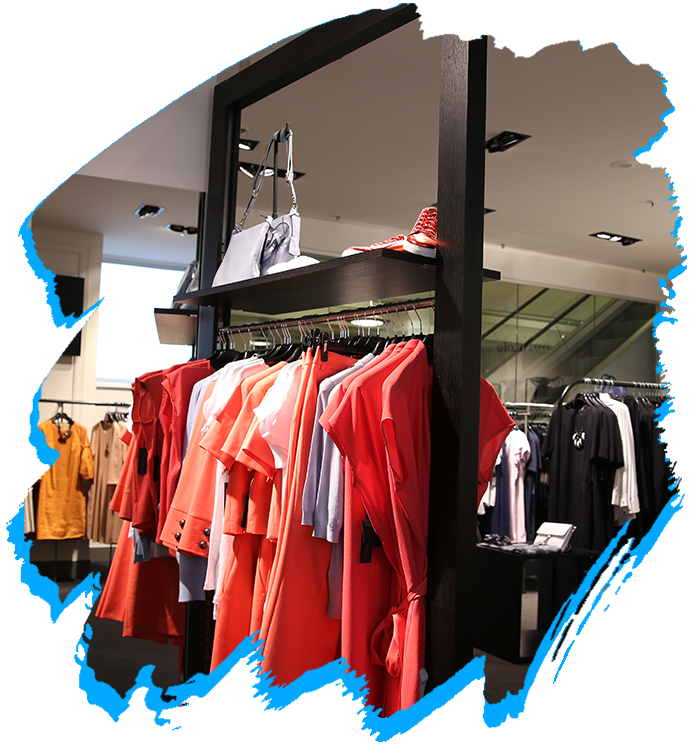
A size 10 is not a size 10 across two labels, and every shopper has learned that the hard way. Your brands with each one's own chart is the most useful page an apparel shop can have, because it answers the question that keeps people from driving over.
Runs a size small. Cut for a long torso. Stretches after an hour. Size up in the raw denim. These are the sentences you say twenty times a week on the floor, and they belong in writing.
Bridal, formalwear and styling all run on appointments, and customers hesitate because they do not know what they are agreeing to. Say how long it takes, how many people to bring and how far ahead to book.
Whether you have one on site or refer out, and how long a hem, a take-in or a bustle sits before it is ready. Give ranges rather than a price list and you field fewer calls that go nowhere.
Special orders and altered pieces are usually final, and that is normal in apparel. Written clearly, it reads as professional. Discovered at the register, it reads as a trap.
Pieces you have carried, styled the way you style them, with one honest line saying inventory is one-of-one and to message about anything specific. The page sells your taste without promising a dress that already sold.
Uniforms for a school, workwear for a company, bridesmaids and dance teams. These buyers want terms, embroidery options, turnaround and a person to talk to, not a styled photo. Give them their own page.
If you take pieces in, the rules save you hours: what you accept, which seasons, what condition, how the split works and when payouts happen. Published once, it screens out the bags left on your back step.
Somebody pulls pieces before you arrive, based on what you are dressing for and what you actually wear. You try them on in a room that is yours for the hour instead of digging through a rack alone.
A two-hour appointment booked ahead, with help through silhouette, size and budget. Gowns are ordered rather than taken off the rack, so the timeline gets explained up front.
Formal, flattering, and nothing that competes with the gown. It is a fitting that benefits from somebody who has seen a hundred of these and knows what photographs well.
Dresses registered by school so two girls do not arrive in the same one, in a season that runs hot for about six weeks. Coming early means more of the floor to choose from and room in the alterations schedule.
Hems, take-ins, strap adjustments, bustles and sleeve work, done on site or by a seamstress we work with. Ask the range and turnaround when you drop a piece off.
Hats, jeans, snap shirts and boots that are fitted on your foot rather than guessed from a number. Boot sizing has its own rules, and so does breaking a pair in.
School polos, scrubs, kitchen wear and company shirts, with a logo stitched on and an account for repeat orders. A sample set gets tried on the roster before anything is ordered.
Which labels on the floor actually run to your size and length, stated honestly, so nobody drives half an hour to find out the answer is nothing.
If a piece is on the floor in the wrong size, it can often be ordered in yours. Ask about timing and whether an ordered piece is final sale before it is placed.
Bring good pieces in by appointment and get a share when they sell. Intake rules, the split and the payout schedule are written down.
For the person buying for somebody with specific taste. Say who it is for, and leave with something she will actually wear.
| BuilderNow | DIY website builders | |
|---|---|---|
| Who builds the site | We build it from answers you give about your brands, sizing and appointments | You pick a template and lay out every page yourself |
| Adding a new label or size chart | Send a text or an email and support adds it | You log in between customers and edit it yourself |
| Price | $25/month or $250/year with the domain, hosting and support included | A monthly plan, with the domain usually billed separately |
| Selling online | Not part of the $25 plan. An online store is quoted separately as its own project | A higher-priced plan that you set up, stock and run yourself |
| Trying it before you pay | 30-day free trial on a yoursite.buildernow.net address, custom domain on the paid plan | Trials vary, and you are the one building the site during yours |
| What it asks of you | One conversation about your racks, fit notes and appointments | Evenings on layouts after a day of steaming and restocking |
73% of consumers used a mobile phone for their most recent local business search.
BrightLocal, 202649% of consumers trust online reviews about as much as recommendations from people they know.
BrightLocal, 202659% of consumers expect a business to have 20–99 reviews before they trust its average rating.
BrightLocal, 202417% of small businesses still have no website.
Clutch, 2025Try it free for thirty days. We build your page on a yoursite.buildernow.net address with your labels, size charts, fit notes, appointment process and policies, and you look at it on your own phone the way a customer would.
If it works, the paid plan is $25 a month or $250 a year with the domain, hosting and support included, and your custom domain goes on then. If not, walk away having paid nothing. Start in a quiet stretch, not the week prom season opens.
Start your 30-day free trial