A Website for Fishing Charters That Sells the Trip Before They Arrive

Your next customer is on a couch in Ohio in February, booking one fishing day inside a July beach week, and your website is the only version of you he meets before he steps aboard.

  • Built for you by us — no drag and drop, no templates to wrestle
  • $25/month or $250/year, domain and hosting included
  • 30-day free trial on your own subdomain
Build Your Fishing Website

We build awesome
Fishing websites.

Fill out your information and in 3 simple steps your preview will be built, no coding necessary.

Pick a Domain

The beginning of your home on the web starts with a name.

Describe Your Business

Tell us a bit about your business; the services you offer, and your history.

Tell Us About You

Let us know how customers can best contact or reach you.

Unlimited Possibilities.
3 simple steps.

Watch this short video for a quick walk through on how simple it is to get your website online.

Get Your Business Online Within in Minutes

Website Design made easy. Just one click away.

Get Started

Why Fishing businesses choose BuilderNow

Fast, Friendly, Secure, Quality

Fully Secured

All of our websites are fully secured with SSL encryption as well as top of the line servers.

Best Performance

Our web hosting servers have an uptime of 99.99%. Host with us hassle free with an online gurantee.

What a weak website costs a Fishing business

He books the boat before he books the condo

A family rents a week on the coast in February for the second week of July. One of those seven days is the fishing day, and it gets locked in from a kitchen table 900 miles away. Nobody in that house has met a captain, driven past your slip or asked a neighbor. They search, they read, they pick. For most businesses a website is a brochure. For a charter it is the entire sales channel.

Nobody can tell what kind of trip you actually run

Inshore, nearshore and offshore are three different boats, three different fish and three different prices, and the customer does not know that yet. He asks for a half day and means red snapper 40 miles out. She asks for a deep sea trip and wants her kids catching trout in the bay. If your site does not separate the trips by hours, boat, target species and price range, you spend your evenings on the phone correcting expectations instead of taking deposits.

The deposit question is where the booking dies

Somebody about to send a stranger a few hundred dollars for a date four months out has exactly one worry, and it is weather. What happens if it blows 25 and the trip is canceled? Is the deposit refundable, moved, or gone? If that answer is not in writing on a page he can read at 10pm, he closes the tab and opens the next captain's site, where it is.

A listing on a booking portal is not your business

Portals put your boat in a row of thirty names, sorted by price, with a commission on every seat. The customer who had a great day with you comes back next summer and books through the portal again, because that is the only address he has. Your own domain is how a good trip turns into a customer who calls you directly for ten years.

How customers choose a Fishing company

Charter customers split into two groups that shop nothing alike. The visitor is the volume: on vacation, one open day, no idea what is biting, searching from another state weeks ahead by town plus trip type — fishing charters Destin, half day charter Key West, deep sea fishing Outer Banks. The serious angler is the margin: he knows what he wants to target, he reads your catch photos for size and dates, and he is judging whether your boat can get him to the wrecks or the rigs. The same site has to answer both.

Once they land on you, the checks are fast and in the same order almost every time. How long is the trip and what does it cost. What will we actually catch in the month we are coming. How many people can come, because somebody in the group makes seven. Then the deposit and weather policy, then the reviews — and recent reviews carry weight here in a way they do not elsewhere, because a review from last August says nothing about whether the fish are there in May. If those answers are all on the page, the phone call is a formality. If they are missing, the call never happens.

Then there is the season, which runs your whole year and most of their confusion. Federal red snapper windows open and close on dates announced late. Slot limits, closures and catch-and-release periods move. Cobia, kingfish, tarpon and stripers each have their weeks. A customer asking for grouper in a closed month is not being difficult, he just does not know, and the honest conversation about what is genuinely in season on his dates is the one that earns the booking. A site that says plainly what swims in each month does that for you before the phone rings.
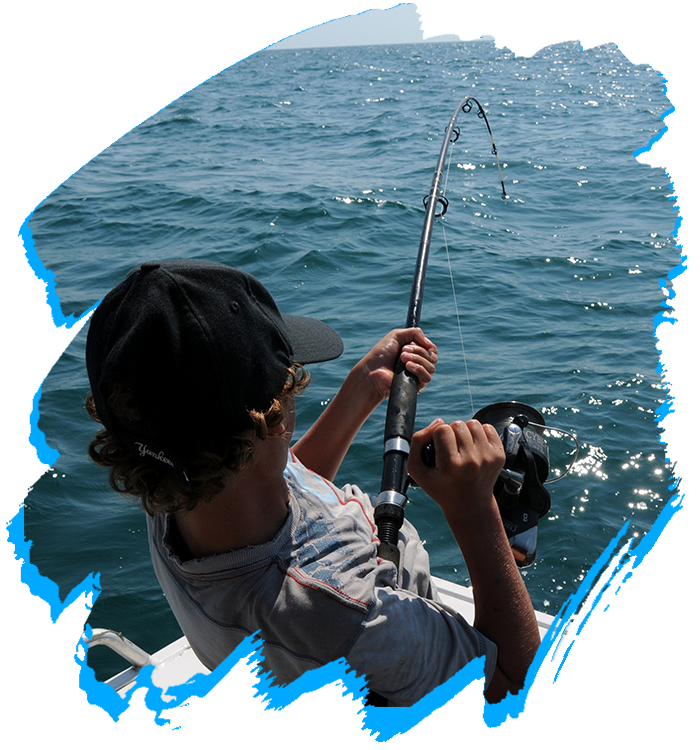
What a Fishing website needs

A page for every trip type, priced in ranges

Half day, three-quarter day, full day, offshore overnight. Each with the hours, the boat, the usual target species, the passenger count and a price range. It is the first thing visitors come to find, and the thing most charter sites bury behind a contact form.

A weather, cancellation and deposit page

Your call on safety, your rescheduling policy, what happens to the deposit, and how far ahead you make the decision. Put it in writing on its own page and link it from every trip. It is the most-asked question in the business, so answer it once in public.

A month-by-month seasons chart

What is running in April versus August, which species are open, which are closed, and which are catch and release. It sets expectations honestly, saves you the same phone call forty times a season, and keeps a customer from booking a trip for a fish that is not there.

What the boat provides and what to bring

Rods, reels, tackle, bait, ice, fuel and the license on your side. Food, drinks, sunscreen, a hat, soft-soled shoes, a cooler for the fillets and a motion sickness remedy taken the night before on theirs. One clear list stops a dozen texts the morning of the trip.

Your license, insurance and the six-passenger limit

Captain's license, drug testing consortium, vessel inspection and current insurance, in one short block. Explain the six-pack cap in plain words, so a group of eight learns it on your site instead of being disappointed on the phone.

Dock directions, meeting time and parking

Marina name, slip number, where to park, and what time to be standing on the dock. Visitors are driving an unfamiliar coast in the dark, so a map link and a phone number cut your late starts.

Recent catch photos with dates on them

Fish on your deck, your customers holding them, the month beside each one. Dated photos from this season prove the boat is running and the fish are there, and they sell harder than any paragraph.

Fishing services your site should cover

Half-day inshore trip

Four hours in the bays, creeks and flats for trout, redfish, flounder or snook. The easiest trip for families, first-timers and anybody with half a vacation day to spend.

Nearshore reef and wreck fishing

A few miles out to structure for snapper, triggerfish, amberjack and king mackerel. Bigger fish than the bay, shorter ride and lower cost than a true offshore run.

Full-day offshore trip

Eight to ten hours running to deep water and hard bottom for grouper, snapper, mahi and whatever else the season allows. The trip serious anglers book months ahead.

Multi-day offshore and overnight runs

Two or three days to the canyons or the rigs for tuna, swordfish, wahoo and marlin. Fishing through the night with a mate aboard and bunks below.

Family and kids trips

A shorter, closer trip built around steady action and short attention spans. Bent rods, calm water, flexible return time, and no pressure to fill a box.

Flats and sight fishing with a guide

A skiff, a push pole and shallow water for tarpon, bonefish or redfish. Fly or light tackle, one or two anglers, casting at fish you can see.

Freshwater lake and river guide trips

Bass, walleye, crappie, catfish or trout on a home lake or tailwater. Boat, electronics, tackle and local knowledge of where they are holding this week.

Trolling and seasonal species trips

Timed runs for the fish that only show up for a few weeks: cobia, kingfish, stripers, salmon or tuna. Booked around the run, not around the calendar.

Private group and corporate charters

The whole boat for a bachelor party, a company outing or a family reunion. Priced by the boat rather than the seat, within the passenger limit your license allows.

Commercial fishing and dock sales

A separate side of the business for some boats: commercial trips and fresh fish sold off the dock. It gets its own page, with landing days and what is available.

BuilderNow compared with doing it yourself

BuilderNow DIY website builders
Who builds the site We do. You send us trip types, prices, photos and your policies. You do, in an editor, at night, after ten hours on the water.
Domain name Included in the $25/month. Usually a separate yearly charge, often renewing at a higher rate.
Hosting Included. Included on the paid tier; the free tier puts their branding on your page.
Changes mid-season Email us the new season dates or prices and support edits it. You log in and make the edit yourself, or it sits wrong until you do.
Online booking and deposits Quoted separately. The $25 plan can link to the booking tool you already use. Sometimes available on a higher tier, plus per-transaction fees.
Trying it first 30 days free on a yoursite.buildernow.net subdomain before you pay. Free tiers exist, but the building work is still yours.

Why this matters for Fishing businesses

67% of consumers start their search for a local business on Google.

DreamHost, 2026

58% of consumers often or always check a business website to confirm information they saw elsewhere.

DreamHost, 2026

74% of consumers care about reviews written in the last three months.

BrightLocal, 2026

45% of consumers say businesses without websites feel less real.

DreamHost, 2026

Fishing website questions

No. The $25 plan is a website, not a booking system; online booking and payments are quoted separately. Most captains start with the site pointing at the booking platform or deposit system they already use, whether that is a booking app, a payment link or a phone number. The site sells the trip and answers the questions, then hands the customer to whatever already takes your money.

It depends on your state and your water, which is exactly why it belongs on the site. Many states let a licensed charter vessel cover saltwater passengers, some require each angler to hold one, and freshwater guide trips often require every person aboard to buy one. Say which applies to your trips and link the state agency page. Guessing wrong costs a customer a fine and you a review.

An uninspected passenger vessel license, the six-pack, allows six paying passengers plus crew. Carrying more means a master license and an inspected vessel. Customers have no idea this exists, so a group of eight assumes you are being awkward. One line on the trip page saying federal rules cap this boat at six, and that larger groups need two boats or an inspected vessel, settles it before the phone rings.

Yes, and it will save you hours. Federal and state seasons move, red snapper windows get announced late, and slot limits and catch-and-release periods change what a customer can keep. A month-by-month chart plus a short note that dates can shift lets someone booking in February for July understand what he is realistically coming for, and makes the honest conversation easier rather than a letdown.

On its own page, linked from every trip, in your own words. State who makes the call, how far ahead you make it, whether a canceled trip is rescheduled or refunded, and what happens to the deposit if the customer cancels instead. This is the most-asked question in the charter business, and someone sending money to a captain he has never met will not book without the answer.

Two short lists beat a paragraph. On your side: rods, reels, tackle, bait, ice, fuel and the license where it applies. On theirs: food, drinks, sunscreen, a hat, polarized glasses, soft-soled shoes, a cooler for fillets and a motion sickness remedy taken the night before rather than at the dock. Add whether you clean fish and whether a nearby restaurant will cook their catch.

Separate pages, yes. They are different boats, different distances, different species and different prices, and a customer who mixes them up books the wrong trip and is unhappy at the dock through no fault of yours. Give each trip its own page with hours, target fish, passenger count and price range, so he arrives expecting the day he is actually going to get.

Put them where a nervous first-timer will see them. Your license, years running this water, drug testing consortium enrollment, vessel inspection where it applies, current insurance and your safety gear. A parent booking a boat for two kids in a state she has never visited is buying trust as much as fishing, and these are the few facts that make a stranger with a boat feel like a professional.

It can, as long as the two stay clearly apart. Charter customers want trips, prices and dates; wholesale buyers and walk-up customers want landing days, species and what is on ice today. Give the commercial and dock side its own page with its own phone number, and keep the main navigation pointed at charters, since that is where the booking comes from.

Get your Fishing website online

Somebody is planning a beach week right now for a month that is still three seasons away, and the fishing day is one of the first things he locks in. He is going to pick a captain off a website, send a deposit and show up on a dock. There is no reason that captain should not be you.

The 30-day free trial puts your trips, prices, seasons and weather policy on a real page at no cost, on a yoursite.buildernow.net address you can hand out. If it is not doing the job by the end of the month, you have spent nothing. If it is, it is $25 a month with the domain, hosting and support in it.

Start the 30-day free trial